 GAF Energy
Lithium batteries are changing how electricity is stored, moved, and used. They power electric vehicles, support grid-scale storage, and help households use solar energy after sunset. Their appeal is practical: high energy density, fast response, and flexible installation. A battery cabinet beside a solar inverter can store midday power for evening lights, cooking, or charging. These advantages help explain why lithium batteries are becoming essential for modern energy systems.
Battery researcher Professor Martin Winter, director of the MEET Battery Research Center, has emphasized through his work that battery performance depends on more than cell capacity. Materials, safety, lifetime, and system design all matter. That broader perspective frames this overview of ten reasons lithium batteries are gaining importance. It also keeps the discussion grounded: a high-capacity battery is not automatically the best choice for every application.
The benefits are real, but not effortless. Batteries require careful thermal management, responsible sourcing, and plans for reuse or recycling. Performance can also change with temperature, charging habits, and age. Those details deserve attention, not a footnote. Understanding both strengths and limitations helps energy planners, businesses, and households make better-informed decisions. This article explores the key advantages while recognizing that the technology still has trade-offs to solve.
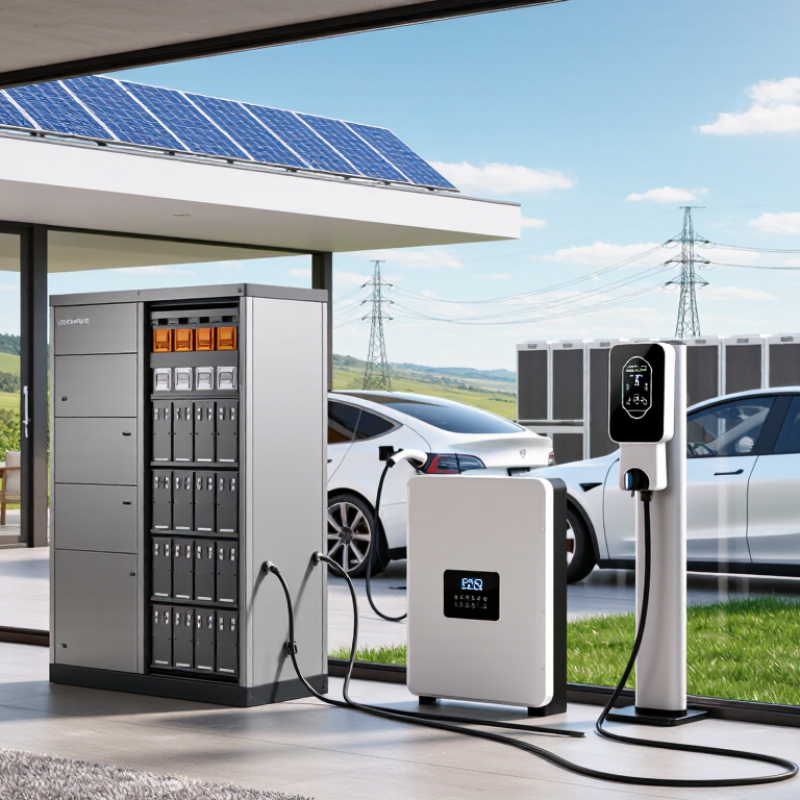
Lithium batteries store energy through reversible chemical reactions inside sealed cells. A typical cell contains a graphite anode, a lithium-bearing cathode, and an electrolyte. During charging, lithium ions move toward the graphite; during discharge, they travel back. Electrons take the external route, powering a device or grid connection. That separation matters. It creates useful electric current.
Think of a phone battery warming in your hand, or a cabinet of cells responding when solar output falls. The chemistry is similar, but system scale changes cooling, monitoring, and safety needs. Cells are grouped into modules and packs, with controls that track voltage and temperature. Small details matter. A damaged cell can behave differently from its neighbors.
Scale is growing quickly. The International Energy Agency’s Global EV Outlook 2024 reports that electric-vehicle battery demand exceeded 750 GWh in 2023, about 40% above 2022. In Batteries and Secure Energy Transitions, the IEA reports power-sector battery storage capacity reached roughly 42 GW in 2023. These figures measure different things: GWh describes stored energy, while GW describes delivery rate. It is easy to blur them. Lithium-ion cells also age with use, heat, and time, so advertised capacity is not a permanent guarantee. Real systems need thoughtful operation, not just a large battery.
| # | Reason | How the Battery Works | Why It Matters to Energy Systems | Representative Fact or Context |
|---|---|---|---|---|
| 1 | High energy per unit of mass | Lithium ions move between the positive and negative electrodes during charging and discharging; the cell’s chemistry and design determine its capacity and voltage. | A relatively light battery can store substantial energy, which is useful in vehicles, portable devices, and space-limited installations. | Commercial lithium-ion cell specific energy varies widely, roughly from 100 to 265 Wh/kg, depending on chemistry and cell design. |
| 2 | Efficient energy storage and delivery | A battery stores electrical energy as chemical potential and converts it back to electricity when ions and electrons flow through their respective paths. | High round-trip efficiency can reduce energy lost when storing electricity and using it later. | Utility-scale lithium-ion systems commonly achieve about 85–95% round-trip efficiency, depending on system design and operating conditions. |
| 3 | Rapid response to changing demand | Power electronics regulate battery charge and discharge, allowing output to change quickly within the system’s operating limits. | Fast response helps balance short-term differences between electricity supply and demand and can support grid frequency control. | Battery systems can change output on sub-second timescales; actual response depends on controls, inverter settings, and grid requirements. |
| 4 | Useful cycle life | Repeated ion movement gradually changes electrode materials and cell resistance, so capacity declines over time. | Long-lasting cells can provide many charge-and-discharge cycles before reaching a defined end-of-life capacity threshold. | Cycle life varies substantially by chemistry, temperature, charge rate, and depth of discharge; published specifications should be compared under matching test conditions. |
| 5 | Flexible system sizing | Individual cells can be connected in series to increase voltage and in parallel to increase capacity and available current. | Modular construction supports applications ranging from small portable electronics to large stationary storage installations. | Battery packs combine cells with monitoring, protection, thermal management, and power-conversion equipment suited to the application. |
| 6 | Multiple chemistry options | Different cathode materials, such as lithium iron phosphate (LFP) and nickel-manganese-cobalt (NMC), provide different trade-offs in energy, power, cost, and operating characteristics. | System designers can select a chemistry based on priorities such as compactness, service life, or application requirements. | LFP and NMC are distinct lithium-ion chemistries; neither is universally best for every application or operating environment. |
| 7 | Compatibility with renewable generation | The battery charges when electricity is available and discharges later, shifting some energy across time. | Storage can help make variable solar and wind generation more usable when production and demand do not align. | A battery shifts energy; it does not create energy, and its usable output is limited by stored charge, conversion losses, and system ratings. |
| 8 | High power capability | Cell chemistry, electrode design, and thermal limits determine how quickly a battery can safely supply or accept energy. | A properly designed system can provide short-duration power for acceleration, backup, or grid-support services. | Power capability is application-specific and is commonly expressed in kW or MW; energy capacity is expressed in kWh or MWh. |
| 9 | Precise monitoring and control | A battery management system monitors cell voltage and temperature and helps control charging, discharging, and protective limits. | Monitoring supports safer operation, cell balancing, fault detection, and more consistent use of the pack. | Protection and monitoring requirements vary by system; a battery management system does not eliminate all battery risks. |
| 10 | Scalable role in modern energy systems | Cells, modules, packs, inverters, and control systems can be integrated to meet different voltage, power, and energy requirements. | Lithium batteries can serve mobile, backup, residential, commercial, and grid-scale applications when designed for the relevant duty cycle. | Thermal management, fire protection, recycling, and end-of-life planning are important parts of responsible system design. |
Note: Values are representative ranges, not guarantees. Battery performance depends on chemistry, cell format, system design, temperature, operating conditions, and test methods.
During charging, lithium ions move toward the graphite anode. During discharge, they travel back, while electrons flow through an external circuit. That movement powers a device.
It usually contains a graphite anode, a lithium-bearing cathode, and an electrolyte. Cells are grouped into modules and packs. Small details matter.
Their high energy per kilogram can help an electric vehicle carry passengers and travel farther. In a handheld tool, lighter weight may ease wrist strain. Pack casings, wiring, and cooling add weight, though.
GWh measures stored energy, while GW measures how quickly energy can be delivered. They are not interchangeable. It is easy to confuse them.
No. Temperature, age, and discharge rate affect usable energy and power. A cold battery may deliver less power than its rating suggests. I would treat headline figures as a starting point, not a promise.
It tracks factors such as voltage and temperature to help keep operation within safe limits. At home, a system might store midday solar energy for evening appliances. Small gains matter.
Heat, time, charge level, and how deeply the battery is discharged can all contribute to wear. Repeated fast charging in hot surroundings may speed it up. It wears gradually.
Monitor usable capacity and compare it with everyday demand. A battery may still run lights but no longer cover several evening appliances. That gap can be easy to miss.
Lithium batteries store energy by moving lithium ions between two electrodes during charging and discharging. Their high energy density allows them to hold substantial power in a relatively small, lightweight package, making them useful where space and weight matter. They can also charge efficiently, deliver power steadily, and withstand many charge cycles when properly designed and managed.
These qualities help explain why lithium batteries are becoming essential for modern energy systems. They can be scaled for electric transport, home energy storage, and grid support, helping balance supply and demand and making renewable electricity more practical to use. Their versatility extends across many applications, but safe operation depends on suitable battery management, temperature control, and responsible handling. Considering materials, manufacturing, use, and recycling also matters when assessing their environmental impact. Together, these strengths and considerations make lithium batteries a flexible part of the transition toward more efficient, adaptable energy systems.
