GAF Energy
Understanding how do lithium batteries work is essential for global buyers comparing cells, packs, and complete energy systems. Inside a lithium-ion cell, lithium ions move between the anode and cathode through an electrolyte. Electrons travel through the external circuit instead. That controlled movement powers a phone, electric vehicle, or solar storage unit.
As battery pioneer M. Stanley Whittingham has said, “You can’t make a battery if you don’t understand the chemistry.” His point remains practical. Chemistry influences voltage, energy density, charging speed, temperature tolerance, and service life. Lithium iron phosphate, for example, usually offers strong thermal stability and long cycle life. Nickel-rich chemistries can provide higher energy density, but they demand careful management.
The picture is not perfectly simple. A battery pack includes cells, sensors, wiring, cooling parts, and a battery management system. The BMS monitors voltage, current, and temperature, then limits unsafe operating conditions. Buyers should inspect usable capacity, cycle-life testing, warranty terms, protection design, and replacement support. A label showing “10 kWh” may not reveal the energy available after reserve limits and conversion losses.
Global purchasing adds another layer. Confirm the manufacturer’s test reports, traceability, packaging quality, and transport documentation. UN 38.3 testing is commonly relevant for lithium battery transportation, but destination requirements can differ. Ask for recent technical data, not only marketing claims. Small details matter, such as connector quality and cold-weather charging limits.
This guide explains how do lithium batteries work and translates that science into seven practical buying tips. Some comparisons will remain imperfect. That is normal. Reliable decisions come from evidence, not impressive numbers alone.
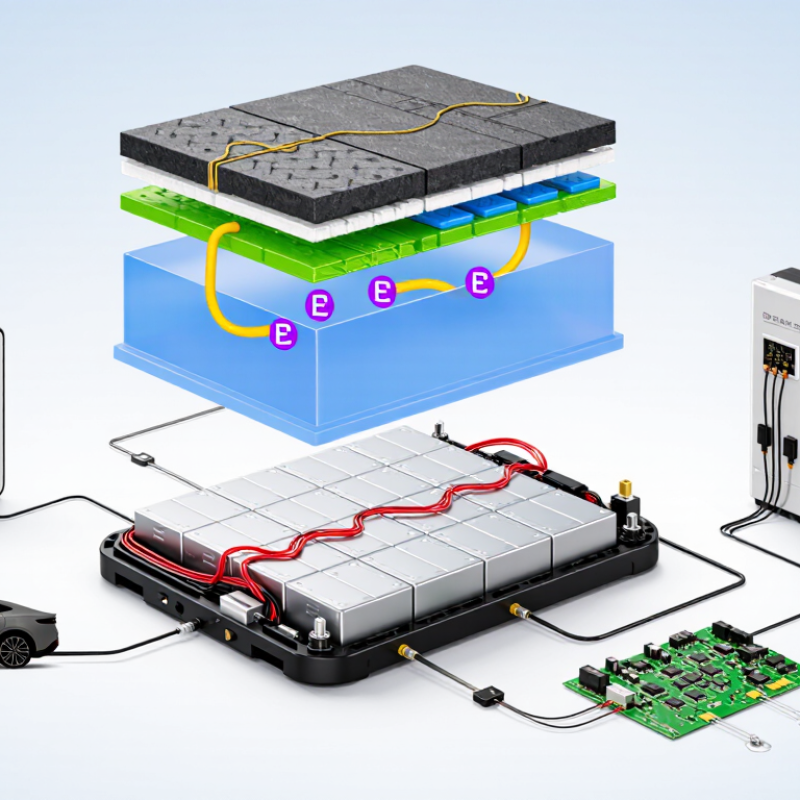
Lithium batteries store energy through the reversible movement of lithium ions. Inside each cell, a cathode, anode, electrolyte, and separator work together. During charging, lithium ions move toward the anode and remain stored there. During use, they travel back through the electrolyte. Electrons move through the external circuit and power the device. The separator prevents direct contact between electrodes. That small barrier is critical. Lithium cells offer high energy density, but performance changes with temperature, age, charging speed, and storage conditions. A battery is not just a metal case with a capacity label. Its internal design matters.
Global buyers should check seven details: chemistry, voltage, watt-hours, cycle life, temperature range, safety documents, and battery management system protections. Ask how capacity was tested and at what temperature. A 100 Ah rating may not deliver 100 Ah in every situation. Review protection against overcharging, overheating, deep discharge, and short circuits. Confirm dimensions, connector type, weight, and communication settings before ordering. Request a sample and inspect its label, terminals, casing, and test records. I treat advertised cycle life as a starting point, not a promise. Real results depend on load patterns and maintenance. Storage conditions also deserve attention. Cool, dry areas usually reduce unnecessary aging, although extreme cold can temporarily limit output. Simple checks prevent expensive misunderstandings.
Inside a rechargeable lithium battery, lithium ions travel through the electrolyte between two electrodes. During charging, ions leave the cathode and move toward the anode. Electrons take a separate route through the external charging circuit. This movement stores energy inside the anode’s layered structure. During discharge, the direction reverses. Ions return to the cathode, while electrons power a device through its circuit. The separator keeps the electrodes apart and helps prevent internal short circuits.
Global buyers should examine seven practical details before selecting cells. Check the stated chemistry, usable capacity, voltage range, and cycle-life test conditions. Ask how performance changes at low and high temperatures. Review the battery management system’s protection for overcharge, overheating, and deep discharge. Confirm independent testing, traceable quality records, and clear transport documentation. These checks matter because a capacity number without test conditions can mislead. A neat datasheet is not proof of field reliability.
In real evaluation, I compare measured results with installation needs, not marketing language. A battery may show strong laboratory capacity yet deliver less energy in cold storage. Cable length, charging speed, and ventilation also affect practical performance. The ion path sounds simple, but heat, aging, and manufacturing variation complicate it. I would request sample data from several production batches. That step can feel excessive. It often reveals differences that one demonstration unit cannot show.
How Lithium-Ion Batteries Work: During charging, lithium ions move from the cathode to the graphite anode. During discharging, they move back to the cathode while electrons flow through the external circuit. The voltage limits below are typical values and vary by cell design and battery-management settings.
A lithium battery is an engineered stack, not a single container of stored electricity. The cathode controls much of its voltage and energy capacity. The anode stores lithium ions during charging. A porous separator keeps both electrodes apart. The electrolyte carries ions between them. Copper and aluminum current collectors move electrons through the circuit. At pack level, the Battery Management System monitors voltage, temperature, and balance. The International Energy Agency reported about 750 GWh of global electric-vehicle battery demand in 2023. This scale makes component quality increasingly important.
Tip: Ask for the exact cathode chemistry and cell format.
Tip: Review capacity, voltage, impedance, and cycle-life data at stated test conditions. A number without conditions can mislead.
Tip: Check separator strength and electrolyte safety evidence. Small defects matter.
Request independent reports for overheating, short-circuit, vibration, and transport testing. IEC 62619 and UN 38.3 documents can support safer international purchasing, but documents still need verification.
Tip: Examine the BMS protection limits and temperature sensors.
Tip: Compare usable energy, not only the advertised nominal capacity.
Tip: Calculate cost per usable kilowatt-hour. BloombergNEF reported an average lithium-ion battery pack price of about 139 dollars per kWh in 2023, but chemistry, volume, and region change the figure.
Tip: Confirm recycling instructions and supply-chain traceability.
A cheaper cell may degrade faster.
I have seen specifications look excellent until testing exposed weak low-temperature performance. That possibility deserves attention.
Lithium-ion batteries move lithium ions between the anode and cathode during charging and use. Electrons travel through the external circuit, producing usable power. Common types include LFP and NMC. LFP usually offers strong thermal stability and long cycle life, while NMC provides higher energy density. The best choice depends on weight, temperature, charging speed, and operating life.
Market data shows why these differences matter. The International Energy Agency reported global electric-vehicle battery demand above 750 GWh in 2023, rising about 40% year on year. BloombergNEF’s 2024 Battery Price Survey placed the average lithium-ion pack price at 115 US dollars per kWh. Prices are falling, but low cost should not replace testing. A buyer should compare usable capacity, not only the advertised number. Cold weather can reduce available power. High charging rates can also increase heat and accelerate aging.
Safety needs more than a battery cell. A reliable pack normally uses a battery-management system, temperature sensors, current protection, cell balancing, physical separators, and controlled pressure relief. IEC 62133-2 and UN 38.3 are useful compliance references, but paperwork does not prove every installation is safe. Ask for independent test records, cycle-life conditions, thermal-abuse results, and traceable production data. Inspect the wiring and enclosure, too. Small details matter. A datasheet can look precise while hiding generous test assumptions. That is where buyers should pause, question, and verify.
| Tip | What to Evaluate | Relevant Battery Types or Data | Typical Technical Information | Why It Matters to Global Buyers | Safety and Compliance Check |
|---|---|---|---|---|---|
| 1 | Choose the right lithium chemistry | LFP, NMC, NCA, LCO, and LTO are common lithium-based chemistries. | LFP generally offers strong thermal stability and long cycle life; NMC and NCA usually provide higher energy density; LTO supports very fast charging and long cycle life but has lower energy density. | The chemistry affects usable capacity, product weight, operating temperature, service life, and total cost. | Request the exact chemistry, cell format, safety data sheet, and test documentation rather than relying on the generic term “lithium battery.” |
| 2 | Compare energy and power performance | Energy is measured in watt-hours (Wh); power is measured in watts (W). | Approximate battery energy: Wh = nominal voltage × ampere-hours. A battery may have high energy capacity but limited continuous or peak power. | Energy determines approximate runtime, while power determines whether the battery can handle motors, inverters, tools, or other high-load equipment. | Check continuous current, peak current, voltage range, connector rating, and protection against overcurrent. |
| 3 | Assess cycle life under stated conditions | Cycle life depends on chemistry, depth of discharge, temperature, charge rate, and end-of-life definition. | A cycle-life claim should state test conditions such as charge rate, discharge rate, temperature, depth of discharge, and the capacity-retention threshold, commonly 80% of initial capacity. | A quoted cycle number without test conditions cannot be used reliably for cost or replacement planning. | Ask for test reports and warranty conditions. Avoid comparing laboratory results directly with field performance. |
| 4 | Check temperature and charging limits | Lithium-ion batteries typically require controlled charging within the manufacturer’s specified temperature range. | Charging below 0°C can cause lithium plating in many lithium-ion cells. High temperatures accelerate aging and may increase safety risks. | Climate, shipping conditions, outdoor installation, and warehouse storage can significantly affect usable life and reliability. | Verify low-temperature charge protection, thermal sensors, cooling or heating provisions, and the permitted storage temperature range. |
| 5 | Verify the battery management system (BMS) | A BMS monitors and controls individual cells or cell groups within a battery pack. | Important functions include cell balancing, overcharge protection, over-discharge protection, overcurrent protection, short-circuit protection, and temperature monitoring. | A properly configured BMS improves consistency, usable capacity, service life, and protection from abnormal operating conditions. | Confirm BMS voltage and current limits, fault response, communication protocol, data logging, and compatibility with the charger or system controller. |
| 6 | Review transport and regulatory requirements | Lithium batteries are regulated as dangerous goods for many international transport modes. | Common documentation may include a Safety Data Sheet, UN 38.3 test summary, package specifications, battery classification, and transport labeling. | Requirements can differ by air, sea, road, destination, battery type, watt-hour rating, and whether the battery is shipped alone or installed in equipment. | Confirm current requirements with the carrier and relevant authorities before purchase. Use approved packaging and declare the shipment accurately. |
| 7 | Evaluate quality, traceability, and end-of-life planning | Cell matching, manufacturing consistency, enclosure design, and traceable batch information influence reliability. | Useful records include cell or pack serial numbers, production date, rated capacity, measured capacity, internal resistance, inspection results, and warranty terms. | Traceability supports quality control, warranty claims, recalls, maintenance, and responsible recycling across different markets. | Check applicable electrical, product-safety, recycling, and producer-responsibility rules in the destination market. Never dispose of lithium batteries in ordinary household waste. |
| Chemistry | Typical Nominal Cell Voltage | Main Strength | Main Trade-Off | Common Application Areas |
|---|---|---|---|---|
| Lithium Iron Phosphate (LFP) | Approximately 3.2 V | Good thermal stability and long cycle-life potential | Lower energy density than many nickel-based chemistries | Stationary storage, commercial vehicles, and many rechargeable power systems |
| Nickel Manganese Cobalt (NMC) | Approximately 3.6–3.7 V | Balanced energy density, power, and cost characteristics | Requires careful thermal and charging management | Portable equipment, electric mobility, and energy-storage systems |
| Nickel Cobalt Aluminum (NCA) | Approximately 3.6–3.7 V | High energy density and strong power capability | Needs robust monitoring and thermal control | High-performance mobility and power applications |
| Lithium Cobalt Oxide (LCO) | Approximately 3.6–3.7 V | High energy density in a compact format | Generally lower cycle-life and thermal tolerance than some alternatives | Small portable electronics and compact battery packs |
| Lithium Titanate (LTO) | Approximately 2.3–2.4 V | Very high cycle-life potential and rapid charging capability | Lower energy density and higher system cost in many designs | High-power systems, frequent-charge applications, and demanding operating environments |
Note: Performance values are typical industry ranges and can vary according to cell design, operating conditions, pack configuration, and test methodology.
Lithium batteries move lithium ions between the anode and cathode during charging and use. That simple motion hides important purchasing risks.
Tip 1: Define the application clearly. A warehouse scanner, electric bus, and backup cabinet need different voltage, capacity, and discharge rates.
Tip 2: Compare usable energy, not only nominal capacity. Temperature, aging, and protection limits reduce real output.
Tip 3: Check chemistry carefully. Lithium iron phosphate usually offers strong thermal stability, while other chemistries may provide higher energy density.
Tip 4: Request independent test evidence. IEC 62133-2 and UN 38.3 documentation should match the exact cell, module, and shipping configuration.
Tip 5: Inspect the battery management system. It should monitor voltage, temperature, current, and cell balance. Small details matter.
Tip 6: Calculate lifetime cost. The International Energy Agency reported that lithium-ion battery pack prices fell 14% in 2023, but low purchase prices can hide replacement, warranty, and integration costs.
Tip 7: Verify supply continuity. Ask about production capacity, traceability, spare parts, and technical support across time zones. BloombergNEF reported further pack-price reductions in 2024, yet market prices do not guarantee consistent quality.
I have seen buyers focus on watt-hours and overlook connector compatibility. That mistake can delay installation for weeks.
I also recheck translated specifications, because one unclear temperature limit can change the safety assessment. A practical quotation should show test dates, operating limits, warranty conditions, and measurable acceptance criteria.
Lithium ions move between the cathode and anode during charging and use. Electrons travel through the external circuit. That movement creates power.
Compare chemistry, voltage, watt-hours, cycle life, temperature range, safety documents, and management-system protections. Check every number carefully.
No. Temperature, aging, discharge limits, load patterns, and protection settings can reduce usable capacity. Nominal capacity is not guaranteed output.
Lithium iron phosphate usually offers strong thermal stability and long cycle life. Other chemistries may provide higher energy density. The application decides.
A reliable pack may include temperature sensors, current protection, cell balancing, separators, and controlled pressure relief. The management system should monitor key conditions.
Request independent cycle-life results, thermal-abuse testing, production traceability, and documents matching the exact battery configuration. Paperwork alone is insufficient.
Cold conditions can temporarily reduce available power. High temperatures and fast charging may increase heat and accelerate aging. Cold weather hurts.
Incorrect connectors, weight, casing size, or communication settings can delay installation. I have seen specifications overlook this detail.
Include replacement needs, warranty terms, integration work, maintenance, spare parts, and technical support. A low purchase price can hide later expenses. Cheap is not always cheaper.
Request a sample and inspect its label, terminals, casing, test records, and operating limits. Recheck translated specifications. I would verify twice.
This guide explains how do lithium batteries work by showing how chemical energy is converted into electrical power through the movement of lithium ions. During charging, ions travel from the positive electrode to the negative electrode and are stored within its structure. During use, they move back while electrons flow through an external circuit to provide energy. The article also introduces the main internal components, including electrodes, electrolyte, separator, current collectors, casing, and control systems.
It compares common lithium battery types and explains how capacity, voltage, energy density, cycle life, temperature, charging speed, and operating conditions affect performance. Safety features such as protection circuits, thermal control, cell balancing, and secure packaging are also discussed. Finally, seven practical tips help global buyers evaluate specifications, quality consistency, certifications, supplier reliability, customization needs, shipping requirements, after-sales support, and total cost before selecting batteries for their applications.
