GAF Energy GAF Energy

7 Tips For Industries That Benefit From Lithium Batteries?

Time:2026-10-08 Author:Isabella
0%

Lithium batteries are no longer limited to smartphones and laptops. They now power forklifts, delivery vans, medical devices, solar storage systems, boats, and factory robots. Their compact design delivers steady energy, fast charging, and fewer maintenance interruptions. Still, performance depends on temperature, charging habits, safety controls, and the battery chemistry selected.

A useful question guides this discussion: what industries benefit most from lithium battery technology? Professor M. Stanley Whittingham, a Nobel Prize-winning battery pioneer, said, “Lithium-ion batteries have revolutionized our lives.” His statement reflects the technology’s broad influence, but it should not become an excuse for careless adoption. Every industry has different load demands, operating conditions, budgets, and recycling responsibilities.

This guide presents seven practical tips for industries considering lithium battery systems. It examines how businesses can compare energy capacity, charging speed, service life, and total ownership costs. It also considers real workplace details, such as cold storage rooms, warehouse loading bays, emergency power cabinets, and vehicle charging schedules. A battery that performs well in a laboratory may struggle beside a dusty production line. That matters.

The strongest applications usually combine frequent equipment use with a clear need for reliable, portable power. However, lithium technology is not automatically the best choice. Sometimes, the promised savings look impressive but weaken after installation, training, monitoring, and replacement costs. That uncomfortable possibility deserves attention. Good decisions require measured evidence, qualified suppliers, documented safety procedures, and honest performance testing. These seven tips offer a practical starting point for that evaluation.
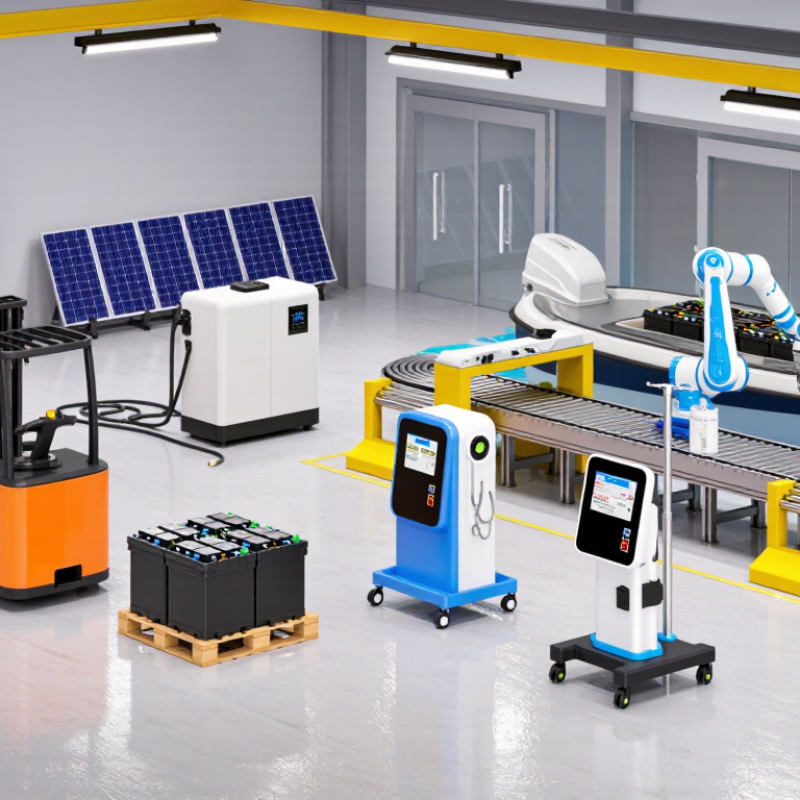
7 Tips For Industries That Benefit From Lithium Batteries?

Lithium Battery Basics and Their Industrial Advantages

Lithium batteries are changing industrial power systems because they store much energy in a compact, controllable package. The International Energy Agency reported that global electric-vehicle battery demand exceeded 750 GWh in 2023, rising by about 40%. Industrial users can apply the same progress to forklifts, warehouse vehicles, backup systems, and remote equipment.

Seven practical tips matter. Choose chemistry according to temperature, workload, and required cycle life. Size the battery for real duty cycles, not ideal ones. Install a battery-management system to monitor voltage, temperature, and state of charge. Provide thermal protection and clear maintenance procedures. Use charging schedules that reduce peak demand. Check whether the enclosure can resist dust, vibration, and moisture. Train operators to report unusual heat or swelling immediately. Small details matter.

The economics are improving, but not automatically. BloombergNEF’s 2023 Battery Pack Prices survey recorded an average lithium-ion pack price of 139 dollars per kWh, a 14% annual decline. That can lower lifetime costs, especially where equipment runs for long shifts. The IEA also reported stationary battery-storage demand above 130 GWh in 2023, growing roughly 75%. Still, a cheaper pack may not deliver cheaper operations. Replacement access, downtime, cooling, and recycling plans can change the calculation. My practical concern is simple: paper efficiency often ignores a dusty charging room and a rushed operator. That gap deserves review.

7 Tips for Industries That Benefit from Lithium Batteries

Lithium batteries are widely used in material handling, warehouse robotics, telecom backup, renewable energy storage, medical equipment, marine systems, and off-highway vehicles. Their high usable depth of discharge can support longer operating cycles and more flexible system design than traditional lead-acid batteries.

Typical usable depth-of-discharge design values: lithium-ion batteries are commonly designed around 80%, while lead-acid systems are often designed around 50% to preserve service life. Actual values vary by chemistry, temperature, battery-management settings, duty cycle, and manufacturer specifications.

How to Identify Industries That Benefit Most from Lithium Batteries

7 Tips For Industries That Benefit from Lithium Batteries

How to Identify Industries That Benefit Most from Lithium Batteries

Industries with frequent equipment movement often gain the clearest advantage from lithium batteries. Check duty cycles, not sales claims. Warehouses, service fleets, medical equipment, and mobile tools may need steady power throughout long shifts. Measure daily operating hours, charging intervals, and available floor space. A lighter battery can improve handling when workers repeatedly move equipment. That detail matters.

Look at seven practical signals: high energy demand, limited storage space, frequent charging, reduced maintenance needs, indoor operation, weight-sensitive equipment, and strict uptime targets. Lithium systems can support these conditions, but the fit is never automatic. Review temperature exposure, ventilation, charging access, and emergency procedures. Battery performance may decline in severe heat or cold. Industry standards and local requirements also deserve professional review.

Real operating data should guide the decision. Compare energy use, downtime, replacement schedules, and total ownership costs over several years. A spreadsheet can mislead when it ignores training or charger installation. I once focused too heavily on runtime and overlooked the site’s limited charging capacity. That was a useful correction. Pilot testing under normal workloads reveals more than a showroom demonstration. Record charge times, battery temperature, operator feedback, and unexpected interruptions. If the battery cannot match the work pattern, a cheaper conventional option may remain more practical.

Seven Practical Tips for Choosing Lithium Battery Solutions

Choosing lithium battery solutions requires more than comparing capacity and price. The IEA’s Global EV Outlook 2024 reported that electric vehicle battery demand exceeded 750 GWh in 2023, rising by about 40%. That scale signals maturity, but every industrial site still needs a tailored decision.

Define the equipment’s load profile, including startup surges and idle periods. Match the battery chemistry to safety, temperature, cycle life, and power requirements. Size capacity with aging, seasonal temperatures, and usable depth of discharge included. Measure twice. Confirm that the battery management system records voltage, temperature, current, and fault events. A spreadsheet can still lie.

Inspect thermal protection, enclosure ratings, ventilation, and emergency procedures before installation. Ask for test records and applicable safety certifications, rather than accepting marketing claims. Compare total ownership cost, including maintenance, downtime, replacement, and end-of-life handling. The IEA’s Global Critical Minerals Outlook 2024 highlights growing pressure on mineral supply chains, so responsible sourcing and recycling plans deserve attention. Check service response times, training, warranty limits, and spare-part availability. Real sites are messy. Pilot testing under actual loads can expose wiring losses, heat buildup, or charging habits that laboratory figures miss. Even experienced teams sometimes oversize systems; that protects runtime but can weaken project economics. Record every assumption and revisit it after three months of operation.

Safety, Installation, and Maintenance Requirements

7 Tips For Industries That Benefit From Lithium Batteries?

Safety, Installation, and Maintenance Requirements

The International Energy Agency reported that global battery storage additions reached about 42 GW in 2023. More facilities now need disciplined safety controls. Tip 1: choose cells with documented test results, not vague performance claims. UL 9540A testing helps evaluate thermal runaway and fire behavior. Tip 2: separate battery rooms from ignition sources, blocked exits, and vulnerable equipment. Tip 3: install ventilation, temperature sensors, smoke detection, and emergency isolation controls. Small details matter.

Tip 4: keep installation drawings beside the main disconnect. Mark cable routes clearly. Tip 5: train workers to inspect swelling, damaged cases, unusual odors, heat, or leaking electrolyte. Never charge a visibly damaged battery. Tip 6: use chargers matched to the battery chemistry and management system. Overheating often begins with poor settings or neglected connections. Tip 7: follow NFPA 855 guidance, local electrical codes, and the manufacturer’s service limits. Requirements vary by site.

Maintenance records should include voltage trends, alarm events, torque checks, and temperature readings. A monthly visual check is useful, but not always enough. High-use systems may need thermal scans and electrical testing by qualified personnel. OSHA guidance emphasizes hazard communication, emergency planning, and worker training. Our practical mistake is assuming a clean battery room is a safe one. Dust, heat, and rushed repairs can still create hidden risks.

Evaluating Costs, Performance, and Long-Term Sustainability

7 Tips For Industries That Benefit From Lithium Batteries

Evaluating Costs, Performance, and Long-Term Sustainability

Tip 1: Measure total cost, not purchase price. BloombergNEF reported average lithium-ion pack prices of $115 per kWh in 2024. Installation, cooling, software, and replacement costs still matter. Tip 2: Match capacity to real demand. Oversizing creates idle assets and unnecessary embodied emissions. Tip 3: Track round-trip efficiency. The U.S. Department of Energy commonly reports 85–95% efficiency for lithium-ion storage systems.

Tip 4: Test performance in actual working conditions. Cold warehouses, dusty construction sites, and frequent fast charging can reduce usable capacity. Tip 5: Calculate payback using realistic electricity prices. The International Energy Agency reported global battery storage deployment grew sharply in 2023, while grid flexibility needs also expanded. The opportunity is strong. The forecast may still be wrong. Tip 6: Include safety inspections, thermal management, and trained maintenance staff in the budget.

Tip 7: Examine the full lifecycle. The IEA’s Global Critical Minerals Outlook 2024 notes that recycling can reduce future demand for newly mined battery materials. Ask suppliers for traceable material data and end-of-life procedures. Recycling is not automatically low-impact. Transport, processing energy, and recovery rates change the result. A practical pilot often reveals more than a polished spreadsheet. One missed detail can distort the entire sustainability case.

7 Tips For Industries That Benefit From Lithium Batteries? - Evaluating Costs, Performance, and Long-Term Sustainability

Tip Industry / Use Case Operational Requirement Why Lithium Batteries Fit Typical Technical Range Cost Evaluation Sustainability Consideration
1. Match the chemistry to the duty cycle Warehousing and material handling Frequent acceleration, opportunity charging, and multiple shifts per day High round-trip efficiency, low maintenance, and no routine watering requirements Usually 1,500–3,000 full-equivalent cycles for common high-energy chemistries; 3,000–8,000 cycles may be achievable with long-life iron-phosphate cells under suitable conditions Compare total cost per operating hour rather than purchase price; opportunity charging can reduce the need for spare battery packs Longer service life reduces replacement volume; recycling and second-life pathways should be specified in the procurement contract
2. Prioritize predictable energy availability Solar and wind energy storage Daily charge and discharge, peak shifting, and renewable-energy smoothing Fast response, modular capacity, and high efficiency for short- and medium-duration storage Round-trip efficiency commonly about 85–95%; practical storage duration is often 1–8 hours depending on system design Evaluate levelized cost of storage, augmentation, inverter replacement, demand-charge savings, and the number of cycles per year A battery powered by low-carbon electricity can reduce operational emissions; end-of-life recovery is essential because manufacturing has material and energy impacts
3. Design for high uptime and easy maintenance Telecommunications and remote infrastructure Backup power during grid outages, limited site access, and long standby periods Low self-discharge, remote monitoring, compact footprint, and reduced routine maintenance compared with lead-acid systems Typical standby design life may reach about 8–15 years when temperature, charging, and depth of discharge are properly controlled Include battery management, thermal control, remote diagnostics, transport, installation, and replacement logistics in the life-cycle cost Smaller and lighter systems can reduce transport-related emissions; specify take-back, testing, and recycling procedures before deployment
4. Optimize for weight, range, and charging access Electric vehicles and commercial fleets High daily mileage, rapid turnaround, regenerative braking, and predictable route schedules Higher usable energy density and power capability than most traditional rechargeable battery systems Cell-level specific energy is broadly about 150–300 Wh/kg, while complete packs are lower after enclosure, cooling, wiring, and controls Calculate cost per kilometer, charger utilization, electricity tariffs, downtime, battery degradation, and residual value Life-cycle emissions generally improve as vehicle mileage increases and the electricity supply becomes cleaner; battery durability is a key sustainability factor
5. Use thermal management as a performance control Marine, mining, and heavy equipment High loads, vibration, dust, temperature variation, and demanding safety requirements High power delivery and modular architecture, provided the enclosure, battery management system, and cooling system are correctly engineered Recommended operating temperatures are commonly near 15–35°C for best performance; charging below 0°C may require protection or preheating Account for ruggedized enclosures, liquid or forced-air cooling, certification, emergency isolation, and reduced fuel or ventilation costs Electrification can reduce local exhaust emissions and noise; robust designs that withstand harsh duty cycles help prevent premature replacement
6. Calculate the value of silent, clean operation Medical equipment and emergency services Reliable power, low noise, low vibration, and immediate availability during critical events Stable voltage, rapid discharge capability, and minimal local emissions during use Usable capacity should be sized with a reserve margin; many systems are designed around several hours of autonomy, depending on the load and backup architecture Include testing, battery replacement intervals, regulatory compliance, monitoring, and the financial value of avoiding service interruption Longer replacement intervals reduce waste; select systems with documented safety testing and transparent end-of-life handling
7. Compare total life-cycle impact, not only purchase cost Construction, agriculture, and industrial machinery Variable loads, seasonal utilization, mobile operation, and access to on-site charging High efficiency, regenerative charging potential, reduced maintenance, and the ability to support zero-emission indoor operation System efficiency often falls within approximately 85–95%; actual runtime depends on load, ambient temperature, speed, terrain, and maintenance Use a five- to ten-year model covering energy, labor, maintenance, charging infrastructure, financing, downtime, replacement, and disposal Measure emissions per operating hour, recycled material content, repairability, utilization rate, and the feasibility of second-life deployment
Planning notes: Cost and performance ranges are indicative industry planning values, not quotations. Actual results vary with battery chemistry, pack size, depth of discharge, charging power, ambient temperature, system integration, financing, installation, and local electricity prices. A complete evaluation should use total cost of ownership, usable energy, cycle life, safety requirements, and end-of-life recovery data.

FAQS

Which industries may benefit most from lithium batteries?

Warehouses, service fleets, medical equipment, and mobile tools may benefit. Frequent movement and long shifts create strong demand. Weight matters.

What should a facility measure before choosing a battery?

Measure operating hours, charging intervals, energy use, and available floor space. Include startup surges and idle periods. Do not trust capacity alone.

Does frequent charging always mean lithium batteries are suitable?

No. Check charging access, temperature exposure, ventilation, and emergency procedures first. A site may need more chargers. The fit is not automatic.

Why can a lighter battery help workers?

Workers may move equipment repeatedly across concrete floors or narrow aisles. Lower weight can improve handling and reduce strain. That detail matters.

How should a facility compare battery costs?

Compare purchase price, maintenance, downtime, replacement, training, chargers, and end-of-life handling. Review costs over several years. A spreadsheet can still lie.

What safety features should an installation include?

Consider temperature sensors, smoke detection, ventilation, enclosure protection, and emergency isolation controls. Keep installation drawings beside the main disconnect. Mark cable routes clearly.

What warning signs require immediate attention?

Watch for swelling, damaged cases, unusual odors, leaking electrolyte, or excessive heat. Never charge a visibly damaged battery. Stop and inspect.

How can testing reveal whether the battery fits real operations?

Run a pilot under normal workloads. Record charge times, temperatures, interruptions, and operator feedback. Laboratory figures may miss wiring losses or heat buildup. Real sites are messy.

What maintenance records should workers keep?

Record voltage trends, alarm events, temperature readings, and connection checks. High-use systems may need thermal scans and qualified electrical testing. Monthly checks may not be enough.

What common planning mistake should teams reconsider?

Teams sometimes oversize batteries to protect runtime. That may weaken project economics and increase unused capacity. I once focused too heavily on runtime and missed charging limits.

Conclusion

Lithium batteries offer high energy density, reliable power delivery, long service life, and flexible installation, making them valuable for many industrial applications. To understand what industries benefit most from lithium battery technology, businesses should evaluate their equipment’s energy demands, operating environment, charging patterns, mobility requirements, and need for uninterrupted power. Industries such as logistics, manufacturing, renewable energy, telecommunications, transportation, and backup power can benefit when lithium solutions match their operational goals.

Selecting the right battery requires careful attention to capacity, voltage, cycle life, thermal management, safety certifications, monitoring systems, and compatibility with existing equipment. Proper installation, protective controls, routine inspections, and responsible maintenance are essential for safe and dependable performance. Companies should also compare the initial investment with charging efficiency, reduced maintenance, longer replacement intervals, productivity improvements, and total ownership costs. By balancing performance, safety, environmental responsibility, and long-term sustainability, organizations can choose a lithium battery solution that supports reliable operations and future growth.

Isabella

Isabella

Isabella is a dedicated marketing professional with a sharp focus on driving brand growth and engagement through strategic content creation. With an extensive background in digital marketing, she combines her passion for storytelling with her keen understanding of industry trends to deliver......