GAF Energy GAF Energy

China Top 10 Commercial Batteries How to Choose?

Time:2026-09-13 Author:Madeline
0%

Choosing among China’s top 10 commercial batteries requires more than comparing prices. The right decision depends on load profiles, discharge duration, safety controls, warranty terms, and local service support. BloombergNEF reported an average global lithium-ion battery-pack price of $115 per kWh in 2024. However, that figure excludes installation, thermal management, software, and grid-integration costs.

The International Energy Agency’s Batteries and Secure Energy Transitions report highlights rapid battery deployment and continuing improvements in manufacturing scale. Yet commercial buyers should not treat every battery as interchangeable. Lithium iron phosphate batteries usually offer strong thermal stability and long cycle life. Nickel-manganese-cobalt systems can provide higher energy density. Flow batteries may suit facilities needing frequent, long-duration discharge. The choice changes with the application.

Dr. Haresh Kamath, an energy-storage expert at the Electric Power Research Institute, has said, “Energy storage is not a single technology; it is a suite of technologies matched to different applications.” That principle guides how to choose batteries for commercial energy storage. A warehouse needing peak shaving may prioritize low cost and daily cycling. A hospital may value backup reliability, redundancy, and fire protection more heavily. A factory with sharp fifteen-minute demand peaks may need high power, not maximum capacity.

Look beyond the brochure.

Review round-trip efficiency, usable capacity, degradation curves, ambient-temperature limits, and emergency procedures. Request independent test records and clear warranty assumptions. Some rankings also oversimplify reality. A cheaper battery can become expensive after replacement costs, downtime, or weak technical support. The most reliable choice is rarely the most dramatic one. It is the system that performs predictably on an ordinary Tuesday, during a heatwave, and after several years of cycling.
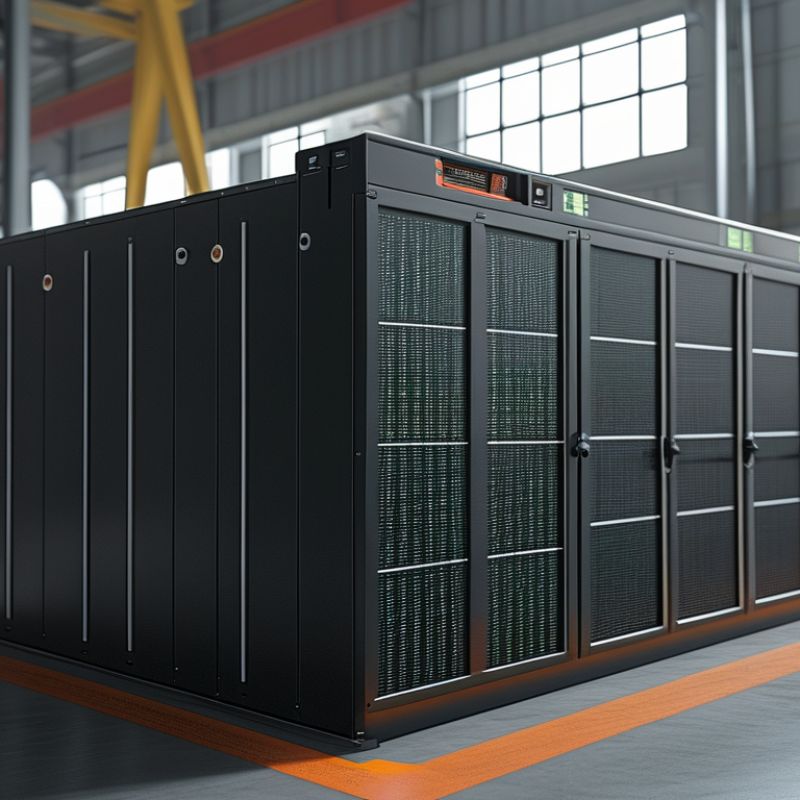
China Top 10 Commercial Batteries How to Choose?

Define the Market: China’s Commercial BESS Usually Ranges from 100 kWh to 10 MWh

China’s commercial battery market is best understood by system size, not cabinet appearance. Most commercial BESS projects fall between 100 kWh and 10 MWh. A small retail site may need 100–500 kWh for peak shaving. An industrial park may require 1–10 MWh for load shifting, backup power, or renewable integration. This range is practical, but not absolute. Site demand, tariff structure, and connection limits can change the correct size quickly.

Industry data supports this growing market. The International Energy Agency’s Batteries and Secure Energy Transitions report (2024) states that global energy storage capacity must increase sixfold by 2030. China Energy Storage Alliance data also recorded strong growth in China’s new energy storage installations through 2023. However, capacity alone can mislead. A 1 MWh system with poor thermal control may deliver less value than a smaller, better-managed system. Real operating conditions matter.

Tips: Start with 15-minute load data, not an annual electricity bill. Compare usable energy, rated power, round-trip efficiency, cycle life, and warranty terms. Ask for operating records at high temperatures. Check the battery’s usable capacity after degradation. Do not select a 10 MWh system simply because it looks more powerful. That decision can create unnecessary capital costs. Conversely, choosing only 100 kWh may leave an industrial site unable to respond during evening demand peaks. Payback estimates should include maintenance, safety equipment, grid charges, and replacement risks. Forecasts are helpful, but they are never perfect.

Rank the Top 10 by Chemistry: LFP Delivers 3,000–8,000 Cycles at 80% DoD

China’s commercial battery market is best compared by chemistry, not headline capacity. A practical ranking is: 1) LFP, 2) lithium-titanate, 3) vanadium redox flow, 4) zinc-bromine flow, 5) NMC, 6) NCA, 7) sodium-ion, 8) LMO, 9) nickel-iron, and 10) lead-acid. The order changes with project goals. LFP usually offers the strongest balance for warehouses, factories, and solar storage.

LFP commonly delivers 3,000–8,000 cycles at 80% depth of discharge, when temperature, charging limits, and maintenance remain controlled. That could support more than ten years of daily operation.

However, this range is not a promise. Poor ventilation, high heat, or aggressive charging can shorten battery life. The International Energy Agency reported that LFP represented about 40% of the global electric-car battery market in 2023, showing its growing commercial acceptance.

Cost also matters. BloombergNEF’s 2024 battery price survey reported an average pack price of 115 dollars per kilowatt-hour, a 20% annual decline. Yet the cheapest purchase is not always the lowest lifetime cost. LFP has lower energy density than several nickel chemistries, so a cramped site may require more floor space. Measure usable energy, replacement intervals, fire protection, warranty assumptions, and real 80% DoD performance. Small details matter. A perfect spreadsheet can still miss daily operating habits.

Compare Performance: Target 85–95% Round-Trip Efficiency and ≥0.5C Power

When comparing China’s top commercial batteries, start with usable energy, not the nameplate. The difference appears during a hot afternoon discharge. A 1 MWh system operating at 0.5C should deliver about 500 kW for two hours, before thermal limits and reserve settings. Higher C-rates can improve demand-charge control, but they may increase heat, degradation, and cooling loads. The 2024 NREL Annual Technology Baseline commonly models utility-scale battery round-trip efficiency near 85%. Treat that figure as a floor for serious commercial evaluation.

Measure the meter.

Round-trip efficiency should target 85–95%, including inverter, transformer, controls, and auxiliary consumption. Lazard’s 2024 Levelized Cost of Storage analysis reports lithium-based storage efficiencies broadly around the mid-80% range, depending on system design. A datasheet may quote cell efficiency instead. That is not the same result. Ask for AC-to-AC test data, operating temperature, state-of-charge limits, and degradation assumptions. These details often change the real project economics.

Power capability deserves equal scrutiny. A system rated at 0.5C may provide 500 kW only under specified conditions. Check whether the rating applies continuously, at end-of-life, or for a short peak. IEC 62933 testing guidance supports evaluating performance under defined duty cycles, rather than relying on one laboratory number. In practice, I would compare measured efficiency at 25°C and high ambient temperature. The second result is less flattering, but more useful. Some comparisons still overlook standby consumption, which can quietly reduce annual savings.

Screen Safety and Compliance: Check GB/T 36276, IEC 62619, and UL 9540A

Choosing among China’s top commercial batteries requires more than comparing capacity, price, and warranty length. Safety documentation should be examined before technical features. Ask whether the battery system matches GB/T 36276 requirements for electrochemical energy storage batteries. Check the tested chemistry, capacity range, operating temperature, and protection functions. A report covering one model may not cover another configuration.

IEC 62619 provides an important industrial safety reference for cells and battery systems. Review evidence for overcharge, external short circuit, thermal abuse, and mechanical safety tests. The test report should identify the sample, production date, test laboratory, and failure results. Missing details deserve attention. A polished certificate is not enough.

UL 9540A evaluates thermal runaway and fire propagation behavior at cell, module, unit, and installation levels. Request the complete report, not only a logo or one-page statement. Compare the tested layout with the planned project. Container spacing, ventilation, cooling, and fire detection can change the result. Inspect alarm settings and emergency shutdown logic during site acceptance. Small wiring errors matter.

Compliance still needs judgment. Standards may be updated, and local installation rules can add requirements. Some suppliers provide incomplete translations or unclear test boundaries. Treat uncertainty as a procurement risk. Keep serial-number records, factory inspection results, and maintenance procedures. The safest choice is the system whose evidence matches the actual site, not merely the battery with the largest advertised capacity.

Commercial Battery Safety and Compliance Screening

Reference editions and publication years for three widely used battery safety standards

GB/T 36276-2018
Safety requirements for lithium-ion batteries used in electrical energy storage.
IEC 62619:2022
Safety requirements for industrial secondary lithium cells and batteries.
UL 9540A:2019
Test method for evaluating thermal runaway and fire propagation in energy storage systems.

Use the chart as an initial screening reference rather than a compliance ranking. Confirm the applicable edition, certification route, battery chemistry, system architecture, installation environment, and local regulatory requirements before selecting a commercial battery.

Choose by Total Cost: Evaluate $/kWh, Warranty, Degradation, and 10-Year LCOE

When comparing China’s top commercial batteries, do not rank systems by purchase price alone. A low $/kWh figure can hide installation, thermal management, software, insurance, and replacement costs. Request a complete delivered-cost quotation, including commissioning and grid integration. Then compare usable energy, not only the advertised nameplate capacity.

Warranty terms deserve careful reading. Check the guaranteed capacity after ten years, annual throughput limits, response-time exclusions, and service obligations. A battery rated at 2,000 kWh may deliver less usable energy at high temperatures or during frequent cycling. Degradation assumptions should match the planned duty cycle. Ask for test data, operating-temperature limits, and independent certification. Marketing claims are not enough.

Calculate ten-year levelized cost of energy, or LCOE, using realistic inputs: total investment, electricity losses, maintenance, financing, residual value, and replacement risk. A simple formula can divide lifetime costs by lifetime discharged kilowatt-hours. Use several scenarios, such as one cycle daily, two cycles daily, and partial cycling. The cheapest result may change quickly. My initial spreadsheet once favored a lower-cost system, but adding capacity fade and downtime reversed the decision. That was a useful correction. Require transparent assumptions, signed warranty language, local technical support, and references from comparable commercial sites before selecting a supplier.

China Top 10 Commercial Batteries How to Choose? - Choose by Total Cost: Evaluate $/kWh, Warranty, Degradation, and 10-Year LCOE

Comparative view of representative commercial and industrial battery configurations commonly available in China. Use total cost of ownership rather than purchase price alone.

Rank Representative Battery Configuration Typical Application Installed Cost
(USD/kWh)
Typical Warranty Annual Capacity Degradation Round-Trip Efficiency Estimated 10-Year LCOE
(USD/kWh discharged)
Best Cost Advantage
1 LFP, 2-hour containerized system Peak shaving and demand-charge management $180–$260 10 years or 6,000 cycles 1.5%–2.0% per year 88%–92% $0.09–$0.14 Lowest balanced cost for frequent daily cycling
2 LFP, 4-hour containerized system Renewable energy shifting and load balancing $165–$240 10 years or 6,000–8,000 cycles 1.5%–2.0% per year 87%–91% $0.08–$0.13 Strongest value where four-hour discharge is required
3 LFP, 1-hour high-power system Fast peak reduction and power-quality support $210–$310 10 years or 5,000–7,000 cycles 1.5%–2.5% per year 89%–93% $0.11–$0.17 High power output with relatively simple thermal management
4 LFP, 6-hour long-duration system Solar shifting and extended evening discharge $175–$255 10 years or 6,000–8,000 cycles 1.5%–2.2% per year 85%–90% $0.09–$0.15 Lower energy cost for longer daily discharge windows
5 LMFP, 2–4-hour system Commercial storage requiring higher energy density $185–$275 10 years or 5,000–7,000 cycles 1.5%–2.5% per year 87%–91% $0.10–$0.15 Potentially improved energy density while retaining a phosphate-based chemistry
6 NMC, 1–2-hour system Space-constrained commercial installations $220–$340 8–10 years or 4,000–6,000 cycles 2.0%–3.0% per year 89%–94% $0.12–$0.19 Higher energy density where installation footprint is limited
7 All-vanadium flow battery, 4–8-hour system Long-duration storage with high cycling frequency $300–$500 10–20 years; stack replacement may apply 0.2%–0.5% per year 70%–85% $0.15–$0.25 Very low capacity fade and independent power-to-energy sizing
8 Lead-carbon, 2–4-hour system Backup power and moderate-cycle applications $150–$260 5–10 years or 2,000–4,000 cycles 3.0%–6.0% per year 75%–85% $0.17–$0.29 Lower initial cost for lower-cycle duty profiles
9 Sodium-ion, 1–4-hour system Cost-sensitive stationary storage and low-temperature sites $170–$280 8–10 years or 4,000–6,000 cycles 2.0%–3.0% per year 85%–90% $0.11–$0.18 Reduced dependence on lithium, nickel, and cobalt materials
10 Second-life lithium-ion, 2–4-hour system Non-critical load shifting and behind-the-meter storage $100–$190 3–8 years, subject to residual capacity 3.0%–6.0% per year 80%–88% $0.14–$0.25 Lowest upfront cost when performance requirements are flexible
Evaluation basis: Values are indicative market ranges for commercial systems and are not supplier quotations. Installed cost may include battery racks, power-conversion equipment, thermal management, fire protection, controls, installation, and commissioning, but treatment varies by project. The 10-year LCOE estimate assumes daily cycling, 90% usable depth of discharge, 2% annual energy-price escalation excluded, replacement costs excluded unless included in the warranty structure, and an 8% nominal discount rate. Actual results depend on project size, location, financing, tariffs, operating temperature, cycling schedule, augmentation, insurance, and interconnection requirements.

FAQS

Which battery chemistry usually offers the best balance for commercial storage?

LFP commonly provides the strongest balance for warehouses, factories, and solar storage. The ranking can change. Project goals matter.

How long can an LFP battery operate?

LFP commonly delivers 3,000–8,000 cycles at 80% depth of discharge. This may support more than ten years of daily operation. Heat, ventilation, charging, and maintenance can reduce that life.

Does the cheapest battery always provide the lowest lifetime cost?

No. A lower purchase price may hide replacement, cooling, floor-space, and protection costs. Compare usable energy, service intervals, warranty assumptions, and real operating performance. Spreadsheets can miss daily habits.

What chemistry ranking can guide an initial commercial comparison?

A practical order is LFP, lithium-titanate, vanadium flow, zinc-bromine flow, NMC, NCA, sodium-ion, LMO, nickel-iron, and lead-acid. This is only a starting point. The order is not universal.

What round-trip efficiency should a serious project target?

Target about 85–95% round-trip efficiency. Include the inverter, transformer, controls, and auxiliary loads. Cell efficiency alone is insufficient. Measure the meter.

What does a 0.5C rating mean in practice?

A 1 MWh system rated at 0.5C may deliver about 500 kW for two hours. Thermal limits, reserve settings, and battery age can reduce output. Check whether the rating is continuous or temporary.

Why should operators test batteries at different temperatures?

High ambient temperatures can increase cooling demand and accelerate degradation. Compare results near 25°C and during hot afternoons. The second result may look worse.

Which details should buyers request before comparing battery systems?

Request AC-to-AC test data, temperature conditions, state-of-charge limits, standby consumption, and degradation assumptions. Check performance at the end of life, not only when new. Some comparisons still overlook standby losses.

Conclusion

Choosing the right commercial battery energy storage system starts with defining the project’s scale and operating needs. In China, commercial BESS applications commonly range from 100 kWh to 10 MWh. The top options are often ranked by chemistry, with lithium iron phosphate (LFP) standing out for its balance of safety, durability, and cost, typically delivering 3,000–8,000 cycles at 80% depth of discharge. When comparing systems, prioritize a round-trip efficiency of 85–95% and a power rating of at least 0.5C to support practical charging and discharging requirements.

To understand how to choose batteries for commercial energy storage, evaluate more than the initial price. Confirm compliance with relevant standards such as GB/T 36276, IEC 62619, and UL 9540A, while reviewing thermal management, monitoring, and protection features. Finally, compare total cost of ownership, including price per kWh, warranty terms, capacity degradation, maintenance, and the projected 10-year levelized cost of energy. This approach helps identify a reliable, safe, and economically sustainable solution.

Madeline

Madeline

Madeline is a dedicated marketing professional with a wealth of expertise in our company's core offerings. With a keen understanding of the industry, she brings a unique perspective to her role, consistently delivering high-quality content that highlights the superior aspects of our products. As......