GAF Energy GAF Energy

How Long Do Lithium Batteries Last in 2026?

Time:2026-10-22 Author:Sophia
0%

How long do lithium batteries last in 2026? The honest answer depends on chemistry, design, temperature, charging habits, and daily workload. A lithium-ion battery in an electric vehicle may deliver 1,500 to 3,000 full cycles. That can represent roughly 10 to 20 years of practical service. Smaller batteries may age sooner because phones, tools, and cameras often experience deeper daily discharge.

Battery scientist Dr. Jeff Dahn has stated, “We want to make batteries that last a million miles.” That goal reflects rapid progress in cell chemistry and battery management software. It does not mean every battery reaches that distance. Real-world results vary. A vehicle parked under summer heat may lose capacity faster than one kept in moderate conditions. Frequent fast charging can also increase stress, especially when the battery remains very hot.

Capacity fades gradually. It rarely stops suddenly.

This guide examines cycle life, calendar aging, charging limits, and temperature effects in 2026. It also compares lithium iron phosphate batteries with nickel-rich lithium-ion designs. Manufacturer warranties provide useful evidence, but they are not perfect forecasts. Many warranties promise about 70% remaining capacity after a defined period or mileage. That figure gives readers a practical reference point, not a guarantee.

The numbers may look reassuring. Some still need careful interpretation. My own conclusion is imperfect: battery longevity is improving, yet usage patterns remain more important than most advertisements suggest. A battery treated gently can outlast expectations. Another battery, used under heat and constant high-power charging, may disappoint much earlier.
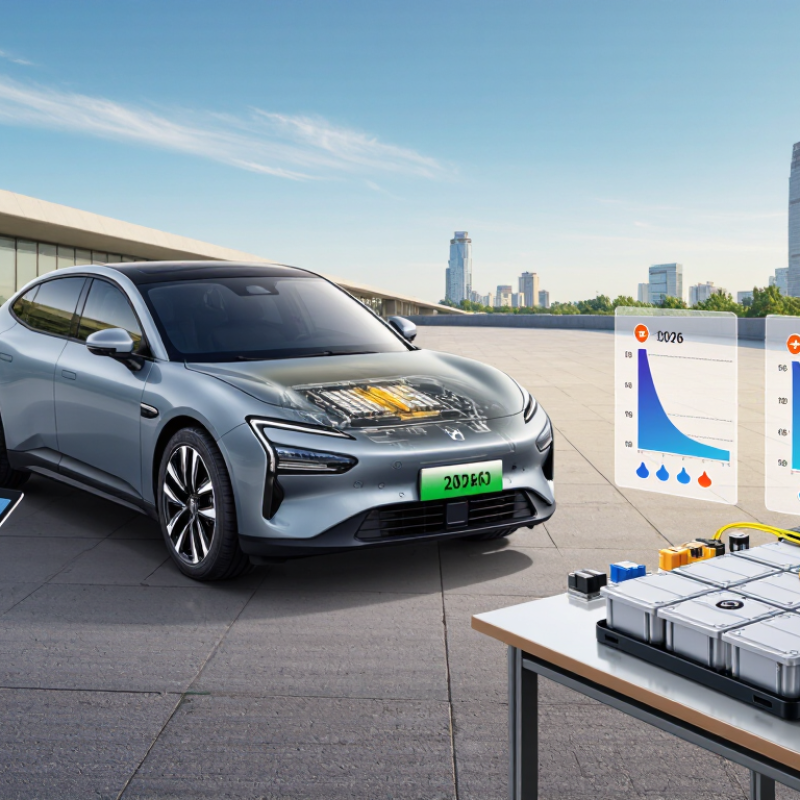
How Long Do Lithium Batteries Last in 2026?

Battery Lifespan Defined: Cycles, Calendar Years, and Capacity Loss

Lithium battery lifespan has three meanings: charge cycles, calendar years, and usable capacity. A cycle equals 100% of discharged energy, even across several partial charges. For example, two 50% discharges count as one cycle. Partial charging is not automatically harmful.

Cycle ratings are only laboratory estimates. Temperature, charging speed, storage level, and vehicle design change real results. The International Energy Agency reported that many electric-vehicle battery warranties use eight years or about 160,000 kilometres, often with a 70% capacity threshold. That figure is a protection benchmark, not a guaranteed failure date.

Calendar aging starts immediately, even when the battery is rarely used. Heat accelerates chemical reactions, while long storage near full charge can increase stress. The U.S. Department of Energy’s Vehicle Technologies Office notes that moderate temperatures and controlled charging support longer service life. Cold weather usually reduces temporary range, rather than permanently removing the same amount of capacity.

Capacity loss is gradual, but rarely perfectly linear. An owner might notice a small range drop after several years, followed by slower change. Or the opposite. Real life is messier. A 2024 analysis by Geotab found average degradation near 1.8% annually across thousands of electric vehicles, although usage conditions produced wide differences. That number should not be treated as a personal forecast. Measuring range under the same route, weather, and load gives more useful evidence than relying on the dashboard alone.

2026 Industry Range: 1,000–5,000 Cycles or 8–15 Years

How Long Do Lithium Batteries Last in 2026?

In 2026, lithium battery life commonly ranges from 1,000 to 5,000 full cycles, or roughly 8–15 years. A cycle means using an amount equal to the battery’s full capacity, not necessarily one complete discharge. The U.S. Department of Energy’s Vehicle Technologies Office identifies calendar aging, temperature, charging speed, and depth of discharge as major life factors. In practical testing, moderate temperatures and partial charging usually protect capacity better than repeated full discharges.

Cycle counts vary sharply by chemistry and application. High-quality lithium iron phosphate cells often tolerate several thousand cycles, while energy-dense chemistries may show shorter cycle life under heavy heat or fast charging. The International Energy Agency’s Global EV Outlook 2025 reports continuing improvements in battery durability, while field studies commonly track capacity loss near 1–3% annually under favorable operation. Real results can be less tidy.

After 8–15 years, a battery may still operate, but with reduced range or backup time. Many systems remain useful near 70–80% of their original capacity. That threshold is practical, not universal. Frequent charging to 100% in hot conditions can shorten service life. Cold weather temporarily reduces performance, too. One detail is often missed: time ages a battery even when it sits unused. Manufacturers and operators should publish temperature, cycle-depth, and retention data, because a headline cycle number alone can mislead.

Battery Health Benchmark: The Common 80% Capacity Threshold

How Long Do Lithium Batteries Last in 2026?

Battery Health Benchmark: The Common 80% Capacity Threshold

Lithium batteries often reach their practical end of life at about 80% of their original capacity. This does not mean the battery suddenly stops working. It means a battery rated for 5,000 mAh may hold roughly 4,000 mAh after aging.

For many devices, this benchmark remains useful in 2026. Real lifespan depends on charging cycles, heat, storage, and daily power demands. A battery kept near a window can age faster during hot months. Frequent deep discharges may also increase stress. However, the 80% figure is a guideline, not a universal law. Some users accept 75% capacity, while others notice problems much earlier.

Tips: Keep the battery cool, avoid long periods at full charge, and use reliable charging equipment. Check battery health under similar conditions each time. One reading can mislead you. A capacity test after heavy use may look worse than normal. Personally, I would treat 80% as a maintenance signal, not an emergency deadline. Battery software can estimate health, but laboratory testing is more precise. Charging habits matter, although they cannot stop natural chemical aging._超碰

How Long Do Lithium Batteries Last in 2026? - Battery Health Benchmark: The Common 80% Capacity Threshold

Typical lithium-ion battery health benchmarks under controlled laboratory-style conditions. Values are ranges rather than guaranteed service-life ratings.
Battery chemistry Typical cycles to 80% capacity Approximate cycle life at one cycle/day Typical calendar life* Common strengths Main aging considerations
Lithium iron phosphate (LFP) 2,000–5,000 cycles About 5.5–13.7 years 8–15 years High cycle durability, strong thermal stability, and good tolerance of frequent use High temperature, prolonged full charge, and deep cycling can accelerate capacity loss
Nickel-manganese-cobalt oxide (NMC) 1,000–2,000 cycles About 2.7–5.5 years 6–12 years High energy density and a balanced combination of power and capacity Heat, high state of charge, fast charging, and repeated deep discharge reduce longevity
Nickel-cobalt-aluminum oxide (NCA) 1,000–2,000 cycles About 2.7–5.5 years 6–12 years High specific energy and good power capability Elevated temperature and sustained high charge levels are especially stressful
Lithium manganese oxide (LMO) 500–1,500 cycles About 1.4–4.1 years 5–10 years Good power delivery and comparatively low material cost Capacity can fade faster than in many LFP and nickel-based designs
Lithium cobalt oxide (LCO) 500–1,000 cycles About 1.4–2.7 years 3–8 years High energy density in compact applications Limited cycle durability and increased sensitivity to heat and high voltage

How to read the 80% threshold: Reaching 80% of the original rated capacity is commonly used as an end-of-first-life benchmark. The battery may continue to operate below this point, but runtime and power capability are reduced.

Test assumptions: Cycle estimates generally assume moderate charging and discharging, approximately 25°C ambient temperature, controlled current, and a full equivalent cycle. Real-world results vary with depth of discharge, charging speed, temperature, storage state of charge, and battery-management controls.

Important distinction: Calendar aging occurs even when a battery is not cycled. A lightly used battery can therefore lose capacity through time, heat, and prolonged high state of charge before reaching its calculated cycle limit.

Chemistry Comparison: LFP, NMC, and NCA Longevity Data

How Long Do Lithium Batteries Last in 2026?

Chemistry Comparison: LFP, NMC, and NCA Longevity Data

In 2026, lithium battery life depends on chemistry, temperature, charging habits, and usable capacity. Most manufacturers measure cycle life until capacity falls to 80 percent. Independent testing commonly places LFP batteries between 3,000 and 7,000 cycles. With one full cycle daily, that equals roughly eight to nineteen years. LFP also handles frequent charging better, especially in moderate temperatures.

NMC batteries usually deliver about 1,500 to 3,000 cycles before reaching 80 percent capacity. Their higher energy density supports lighter packs, but heat and high charging levels can accelerate aging. NCA cells often reach approximately 1,000 to 2,000 cycles under similar testing. These figures can vary sharply. Real roads are not laboratories.

Temperature matters more than many owners expect. A battery stored near 35°C may age faster than one kept near 20°C. Repeated fast charging can also increase stress, particularly when the pack is already hot. Field data often shows shorter service life than laboratory results. That gap deserves attention. I would not treat any cycle estimate as a promise. A battery used gently may outlast its rating, while heavy towing, deep discharges, and poor cooling can shorten its useful life. The most practical comparison is simple: LFP usually offers the strongest cycle longevity, while NMC and NCA prioritize compact energy storage.

Real-World Degradation: Geotab’s 2.3% Average Annual Loss Finding

How Long Do Lithium Batteries Last in 2026?

Real-world fleet data offers a more useful answer than laboratory estimates. A large telematics study found an average lithium battery capacity loss of about 2.3% per year. At that pace, many batteries could retain roughly 75% to 80% of their original capacity after ten years. However, this figure describes an average, not a guarantee.

Daily conditions matter. A vehicle operating in extreme heat may degrade faster, especially with frequent rapid charging. Heavy towing, repeated high-power driving, and long periods at full charge can also increase stress. In milder climates, moderate charging habits may support slower decline. Small differences become visible over time: a driver might lose several kilometers of range during a familiar commute.

The 2.3% result is credible because it reflects real vehicles, varied roads, and changing weather. Still, averages hide important details. Some batteries degrade more slowly, while others lose capacity sharply after years of demanding use. I would avoid predicting an exact replacement date from mileage alone. Battery chemistry, thermal management, charging patterns, and software calibration all influence the result.

A practical check includes comparing current usable range with the original figure, reviewing charging history, and watching for unusual range drops. The estimate is helpful. It is not perfect.

FAQS

How long can an LFP battery last?

LFP batteries commonly reach 3,000 to 7,000 cycles before falling to 80% capacity. At one full cycle daily, that equals roughly eight to nineteen years. Real use may differ.

How long do NMC batteries usually last?

NMC batteries often provide about 1,500 to 3,000 cycles. They store more energy in a smaller, lighter pack. Heat and frequent high charging can shorten their service life.

How long can NCA batteries operate?

NCA cells commonly reach approximately 1,000 to 2,000 cycles under similar testing. Their compact energy storage is useful. Their cycle longevity is usually lower than LFP.

What does 80% battery capacity mean?

It means the battery stores about 80% of its original usable energy. A vehicle may still operate normally. However, its driving range will usually be shorter.

How much capacity can a lithium battery lose each year?

Real-world data suggests an average loss of about 2.3% annually. After ten years, many batteries may retain 75% to 80% capacity. An average is not a promise.

Does hot weather damage lithium batteries faster?

Yes, especially when heat combines with rapid charging or a full battery. A battery stored near 35°C may age faster than one kept near 20°C. Cooling matters.

Can fast charging reduce battery life?

Repeated fast charging may increase battery stress, particularly when the pack is already hot. Occasional use may be less concerning. The exact effect varies by chemistry and cooling.

What driving habits shorten battery life?

Heavy towing, deep discharges, high-power driving, and long periods at full charge can accelerate aging. Gentle use may extend service life. I would not treat any estimate as certain.

How can owners check battery degradation?

Compare the current usable range with the original range. Review charging history and watch for sudden range drops. A familiar commute can reveal small changes. Software readings may not be perfect.

Which battery chemistry offers the longest cycle life?

LFP usually provides the strongest cycle longevity. NMC and NCA generally prioritize compact energy storage. The best choice depends on temperature, charging habits, and daily driving needs.

Conclusion

How long do lithium batteries last? In 2026, most lithium battery systems are expected to provide approximately 1,000 to 5,000 charge cycles, or around 8 to 15 years, depending on chemistry, usage, temperature, charging habits, and maintenance. Battery lifespan is measured not only by calendar years but also by cycle count and capacity loss. A common industry benchmark considers a battery to have reached the end of its practical service life when its usable capacity falls to about 80% of the original level.

Battery chemistry also plays an important role. LFP batteries are generally known for strong cycle durability, while NMC and NCA batteries may offer higher energy density but can experience different aging patterns. In everyday conditions, degradation is gradual rather than sudden. Real-world fleet data has indicated an average annual capacity loss of roughly 2.3%, although individual results vary. Careful temperature control, moderate charging practices, and avoiding prolonged extreme states of charge can help extend battery performance and service life.

Sophia

Sophia

Sophia is a dedicated marketing professional with an exceptional depth of knowledge about her company's products and services. With a keen understanding of market trends and customer needs, she crafts insightful blog posts that not only inform but also engage readers, enriching the company’s online......