GAF Energy
China remains a major source of lithium batteries for electric vehicles, energy storage, electronics, and industrial equipment. Global buyers now seek more than competitive prices. They want stable capacity, safer chemistries, reliable delivery, and clear technical evidence. This raises an important question: what are the latest lithium battery industry trends?
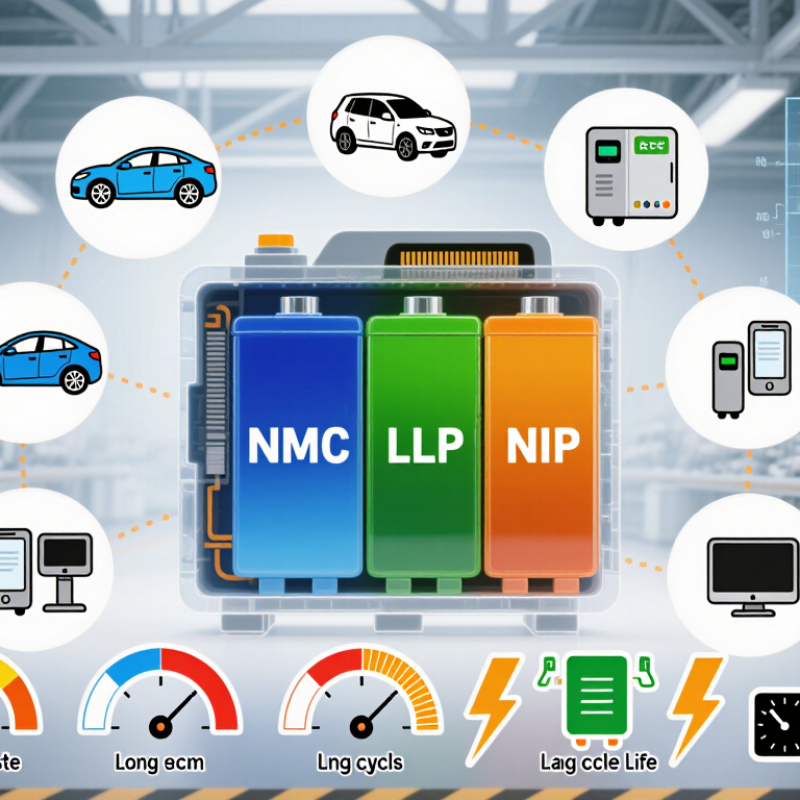
Current demand is moving toward lithium iron phosphate batteries, high energy density cells, faster charging, and longer service life. LFP technology attracts buyers seeking thermal stability and lower material costs. Meanwhile, nickel-manganese-cobalt batteries still support applications requiring higher energy density. Sodium-ion batteries are also gaining attention, although their commercial maturity differs between suppliers. The best choice depends on operating temperature, weight limits, charging habits, and system design.
Experienced buyers examine more than a polished product page. They request cell test reports, batch records, warranty terms, production photos, and independent inspection results. They also confirm transport documentation and relevant standards, such as UN 38.3, IEC requirements, or applicable regional certifications. These checks reveal whether a supplier can deliver consistently, not just make a strong first impression. Factory audits can expose differences between promised and actual production controls.
The market is not perfectly predictable. Prices may change with lithium materials, energy costs, and global demand. Some suppliers also present laboratory results without enough field data. That weakness deserves attention. A reliable sourcing strategy compares chemistry, safety design, lifecycle performance, after-sales support, and compliance readiness. This guide explores China’s leading lithium battery trends and offers practical considerations for buyers evaluating suppliers worldwide.
China Best Lithium Battery Trends for Global Buyers?
Lithium Battery Market Trends Shaping China’s Global Leadership
China’s lithium battery leadership is moving beyond large-scale production. Global buyers now examine safety, traceability, cycle life, and delivery stability. In procurement reviews, cell chemistry often comes before price. Lithium iron phosphate remains attractive for buses, storage systems, and commercial vehicles. It offers strong thermal stability and predictable operating costs.
Manufacturers are also improving pack integration, digital monitoring, and automated quality inspection. A typical factory may track electrode coating thickness, moisture levels, and cell resistance at several stages. These details matter during international certification and long-term field use. Recycling capacity is expanding as well, although collection systems remain uneven across regions. Sodium-ion technology is gaining attention, but its commercial role still requires careful testing.
The market is not flawless. Some buyers may focus too heavily on production volume and overlook service response. That is risky. A delayed replacement cell can stop an entire storage project. Buyers should request test records, warranty terms, transport documentation, and evidence of consistent batch performance. They should also compare results under heat, cold, vibration, and partial charging. Forecasts can be optimistic. Actual performance depends on installation design, maintenance, and local standards. China’s global influence will likely grow, but reliability must be proven repeatedly, not simply announced.
Global electric vehicle battery demand increased sharply from 2020 to 2024, with China remaining the largest demand center and manufacturing base. The expansion reflects rapid electric vehicle adoption, large-scale battery production, and growing energy storage deployment.
Data source: International Energy Agency, Global EV Outlook 2024. Values are rounded estimates in GWh.
China’s lithium battery industry offers several technologies for global buyers. Lithium iron phosphate (LFP) cells are widely used in electric buses, energy storage systems, and commercial vehicles. They provide strong thermal stability, long cycle life, and lower material costs. Their energy density is moderate, so battery packs may require more space.
Nickel-based lithium batteries, including nickel-manganese-cobalt chemistries, deliver higher energy density. They suit passenger vehicles, drones, and portable equipment where weight matters. However, buyers must examine thermal management, charging limits, and raw material exposure. Lithium manganese iron phosphate is also gaining attention. It may balance safety, cost, and driving range, although field results can vary by pack design. Solid-state technology sounds promising, but large-scale availability and long-term testing remain uneven. This is where expectations need checking.
Tips: Match the cell chemistry to the application, not the marketing claim. Request test reports, safety certifications, cycle-life data, and temperature performance. Check whether results reflect full battery packs or individual cells. Ask about capacity retention after repeated fast charging. A factory sample may perform well, yet production consistency can still disappoint. Keep spare capacity for cold climates, heavy loads, and aging. Also review transport rules, installation requirements, warranty terms, and recycling responsibilities in the destination market. Small details matter.
Chinese battery makers are lowering costs through scale, modular designs, and tighter production controls. Engineers increasingly standardize cells, battery modules, and wiring layouts. This reduces assembly time and simplifies replacement work. Automated welding also improves connection consistency. However, lower prices should never replace independent verification.
Safety improvements now focus on thermal control, cell spacing, and early fault detection. Many manufacturers use stronger separators and improved battery management systems. These systems monitor voltage, current, and temperature several times each second.
Factory tests may include overcharge protection, vibration checks, insulation testing, and controlled heat exposure. Global buyers should request test records, traceable serial numbers, and transport documents meeting recognized international requirements. Small details matter.
Performance gains come from better electrode materials, software calibration, and more accurate capacity testing. In practical use, a stable battery should deliver predictable power during cold mornings and heavy loads. Engineers also examine cycle life under real operating conditions, not only laboratory results.
Some suppliers still present optimistic figures. That deserves careful questioning. A 100 Ah rating may change with temperature, discharge speed, and charging limits. Buyers should compare complete test conditions, not isolated numbers.
On-site audits can reveal uneven welding, dusty work areas, or weak documentation. These findings are not always deal-breakers, but they require corrective action.
No design is perfect. Reliability grows when makers admit limitations and improve them openly.
China’s lithium battery industry is moving from rapid expansion toward measurable sustainability. The IEA’s Global EV Outlook 2024 estimates that China produced about 80% of global battery cells in 2023. It also supplied roughly 85% of cathode materials and over 90% of anode materials. This concentration gives global buyers strong production capacity, but it increases exposure to transport delays, policy changes, and regional disruptions.
Recycling is becoming more practical. China’s regulatory framework requires traceable collection, safe dismantling, and recovery assessments before batteries enter reuse channels. The IEA’s Global Critical Minerals Outlook 2024 notes that recycling could significantly reduce future demand for newly mined lithium, nickel, and cobalt. However, recycling data remain uneven. Collection rates, battery chemistry, and recovery efficiency vary between regions. Buyers should request batch-level records, recycled-content evidence, and third-party testing.
Supply chains are becoming more transparent, but not perfectly. Procurement teams increasingly examine electricity sources, water use, chemical handling, and transport routes. The Global Battery Alliance’s Battery Passport framework supports digital records for carbon intensity, material origin, and responsible production. These records can expose weak links before shipment. Still, paperwork is not proof by itself. A factory may report low emissions while using a carbon-intensive power mix. Global buyers should compare audited data with production volumes and site-level energy records. Some figures will remain incomplete. That is a reason for careful review, not blind confidence.
| Trend Dimension | Verified Indicator | Current Data or Development | Implications for Global Buyers | Reference |
|---|---|---|---|---|
| Global manufacturing position | China’s share of global lithium-ion battery cell production | Approximately 75% in 2023 | China remains the largest sourcing ecosystem for cells, cathode materials, anode materials, separators, and battery-pack components. Buyers should evaluate geographic concentration and maintain qualified backup sources. | International Energy Agency, Global EV Outlook 2024 |
| Battery chemistry | Lithium iron phosphate adoption in China | More than 60% of China’s electric-car battery market in 2023 | LFP offers strong thermal stability, long cycle life, and lower dependence on nickel and cobalt. It is well suited to buses, commercial vehicles, energy storage, and cost-sensitive passenger vehicles. | International Energy Agency, Global EV Outlook 2024 |
| Material refining concentration | China’s role in refining key battery materials | China holds a dominant position in refined lithium, cobalt, manganese, graphite, and battery-grade chemical processing | Supply-chain risk is not limited to cell assembly. Buyers should request information on mineral origin, refining locations, responsible sourcing, and exposure to export controls. | International Energy Agency, Global Critical Minerals Outlook 2024 |
| Graphite supply chain | Natural and synthetic graphite processing | China is the leading global producer and processor of battery anode graphite | Potential export restrictions and processing concentration make anode qualification, inventory planning, and alternative-material testing important for long-term procurement. | International Energy Agency, Global Critical Minerals Outlook 2024 |
| Recycling regulation | National management framework for used power batteries | China has established requirements covering collection, cascade utilization, recycling, traceability, and responsible disposal of used new-energy-vehicle batteries | Global buyers should require documented take-back channels, licensed treatment partners, material-flow records, and evidence that batteries are not exported or disposed of through uncontrolled channels. | China Ministry of Industry and Information Technology; national battery-recycling regulations |
| Traceability | Battery lifecycle information management | China operates a traceability-management approach for new-energy-vehicle batteries and recycling participants | Serial numbers, production records, battery chemistry, repair history, retirement status, and recycling outcomes can support warranty management and end-of-life compliance. | China Ministry of Industry and Information Technology |
| Recycled-material strategy | Recovery of lithium, nickel, cobalt, copper, and aluminum | Hydrometallurgical and pyrometallurgical recycling routes are being expanded, with particular value in recovering high-value metals from nickel-rich batteries | Recycling economics vary by chemistry. LFP batteries generally have lower metal value, so buyers should assess transportation, disassembly, processing, and compliance costs separately. | International Energy Agency; China Ministry of Industry and Information Technology |
| Battery safety standards | Safety testing for traction batteries | China’s mandatory power-battery safety standard GB 38031-2020 covers areas including electrical safety, mechanical safety, thermal safety, and abuse testing | Importers should confirm that test reports match the intended vehicle or energy-storage application, transportation route, cell format, pack design, and destination-market requirements. | China State Administration for Market Regulation; GB 38031-2020 |
| International transport compliance | Shipment requirements for lithium batteries | Transport generally requires UN 38.3 testing, correct classification, packaging, labeling, documentation, and state-of-charge controls where applicable | Before shipment, buyers should verify UN 38.3 test summaries, safety data, packaging certification, dangerous-goods declarations, and applicable air, sea, road, or rail rules. | United Nations Manual of Tests and Criteria; International Civil Aviation Organization; International Maritime Organization |
| Carbon disclosure | European market requirements affecting imported batteries | The EU Battery Regulation introduces progressively stricter carbon-footprint, recycled-content, labeling, due-diligence, and digital battery-passport requirements | Chinese suppliers serving Europe increasingly need product carbon-footprint data, verified manufacturing information, recycled-content evidence, and structured product-level documentation. | Regulation (EU) 2023/1542 |
| EU recycling targets | Minimum recovery targets for waste batteries | Lithium recovery target: 50% by the end of 2027 and 80% by the end of 2031; cobalt, copper, lead, and nickel recovery targets: 90% by 2027 and 95% by 2031 | Buyers selling into Europe should select recycling partners capable of providing auditable recovery data and documentation aligned with the applicable battery category. | Regulation (EU) 2023/1542 |
| Energy-storage growth | Battery demand beyond electric vehicles | Stationary battery storage is expanding alongside renewable power, grid flexibility, and distributed energy systems | For stationary projects, buyers should prioritize calendar life, cycle-life guarantees, fire-safety design, thermal management, system certification, and service support rather than cell price alone. | International Energy Agency, Batteries and Secure Energy Transitions |
| Supply-chain sustainability | Responsible sourcing and environmental, social, and governance controls | Global procurement is moving toward mine-to-cell traceability, emissions accounting, labor-risk screening, water-impact evaluation, and supplier audits | Request third-party audit records, environmental permits, energy and emissions data, responsible-mineral policies, grievance procedures, and corrective-action reports during supplier qualification. | OECD Due Diligence Guidance; International Energy Agency |
| Recommended buyer priorities | Practical purchasing checklist | Compliance first Traceability Lifecycle cost | Compare suppliers using chemistry suitability, independent safety testing, warranty terms, degradation guarantees, carbon data, recycling arrangements, spare-parts support, and total delivered cost. | Best-practice synthesis based on the references listed above |
Chinese battery supply has become highly competitive, but price should not decide your purchase. The IEA’s Global EV Outlook 2024 reports that China produced about 80% of global battery cells in 2023. The same report notes strong cost advantages in Chinese battery manufacturing. BloombergNEF’s 2023 Battery Price Survey recorded an average pack price of 139 US dollars per kWh globally. These figures explain the attraction for international buyers, but they do not prove product suitability.
Tips: Check the chemistry, tested capacity, cycle life, and operating temperature. Request recent third-party test reports, not only factory documents. Confirm UN 38.3 transport testing and relevant market certifications. Review warranty terms carefully. A warranty without clear capacity-retention limits is weak protection. Ask for production-batch traceability, cell consistency data, and sample inspection rights. Small details matter.
Buyers should also examine after-sales support, replacement procedures, and communication speed. A battery may perform well in a laboratory yet struggle in a humid warehouse or cold outdoor system. Supplier claims need independent verification. In my view, this is where many evaluations become too optimistic. No checklist is perfect. A sensible buyer should test samples under real load conditions and compare results with the promised specifications. The IEA also highlights continuing battery cost reductions, but lower prices can reflect changing materials, market pressure, or reduced margins. Ask why the price is low. Then document every answer.
They use large-scale manufacturing, modular designs, standardized cells, and automated welding. These choices shorten assembly time. They also simplify replacement work. Lower cost alone proves little. Buyers should verify quality independently.
Check thermal control, cell spacing, stronger separators, and battery management systems. These systems monitor voltage, current, and temperature several times each second. Ask for overcharge, vibration, insulation, and controlled heat test records. Small details matter.
Compare capacity, cycle life, temperature range, and discharge conditions. A stated 100 Ah capacity may change with temperature or charging limits. Test samples under real loads. Cold mornings can expose weakness. Laboratory figures may look too optimistic.
Request recent independent test reports, traceable serial numbers, and transport documents. Confirm recognized market certifications and UN 38.3 transport testing. Factory paperwork is useful, but it is not enough. Keep every answer documented.
An audit can reveal uneven welds, dusty work areas, and weak production records. These findings may not end a purchase. They do require corrective action. A clean brochure cannot show everything.
Review replacement procedures, response times, and capacity-retention limits. A warranty without measurable limits offers weak protection. Ask who handles failures. That part gets overlooked.
Humid warehouses, cold outdoor systems, and heavy loads can change battery performance. Request operating-temperature data from realistic tests. Do not rely on one laboratory result. Real conditions are messier.
Lower prices may reflect scale, changing materials, market pressure, or reduced margins. Ask what changed. Compare samples, test conditions, and documentation. The cheapest option may not be the safest long-term choice. Still, no checklist is perfect.
China’s lithium battery industry continues to strengthen its global position through expanding production capacity, improving technology, and developing more integrated supply chains. For buyers asking “what are the latest lithium battery industry trends,” key developments include the wider use of lithium iron phosphate and high-nickel battery chemistries, increasing interest in solid-state technologies, and growing applications in electric vehicles, energy storage systems, portable electronics, and industrial equipment. These trends reflect a market focused on higher energy density, longer service life, faster charging, and reliable performance.
Chinese battery manufacturers are also improving cost efficiency through automation, localized materials, advanced quality control, and optimized production processes. Safety enhancements include better thermal management, battery monitoring, and protective design. At the same time, sustainability is becoming more important, with greater attention to low-carbon manufacturing, responsible raw-material sourcing, battery reuse, and recycling. Before choosing a Chinese battery supplier, global buyers should evaluate certification, safety testing, production consistency, warranty terms, traceability, logistics capability, after-sales support, and compliance with destination-market requirements.
